
WHEN THE STARTUP MINDSET BECOMES A BUSINESS STRATEGY
JERRY KRATTIGER | 23.09.2026
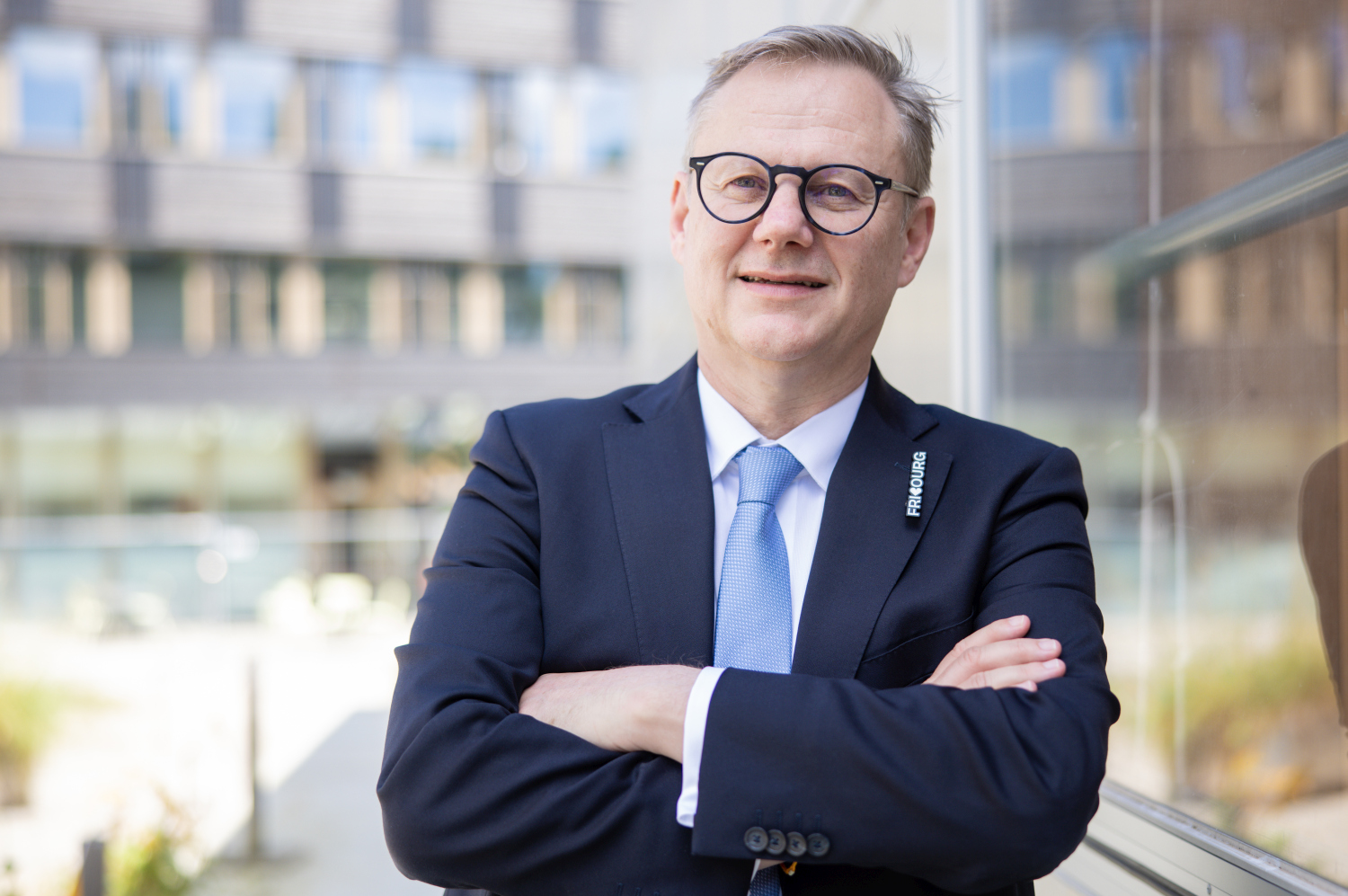
Jerry Krattiger, directeur de la Promotion économique du canton de Fribourg.
Fribourg has emerged as a powerhouse of innovation and entrepreneurship in recent years. Today, the canton boasts the expertise, infrastructure, and networks needed to support a business project from concept to market. Jerry Krattiger, Managing Director of the Fribourg Development Agency (FDA), reflects on these developments and shows how the entire regional economy is now benefiting from this upturn.
Fribourg has become a startup hub. How do you explain these recent developments?
Where do I start! First, the canton now enjoys an unprecedented level of visibility. In 2025, Bloom Biorenewables and Seprify were ranked among Switzerland’s 10 most promising startups. This kind of recognition enhances the credibility of our ecosystem. Second, a growing number of business ventures have their origins in research carried out by Fribourg’s higher education institutions. This is a vital pipeline for gradually turning scientific expertise into concrete, revenue-generating innovations. Finally, our ecosystem has matured. Today, Fribourg has the expertise, infrastructure, and networks needed to support a business project from beginning to end. We have taken a huge step forward but there is still a great deal of potential that remains untapped. I would love to see even more startups emerge from academia.
What are the cornerstones of the “Fribourg model”?
We are charting our own course by capitalizing on Fribourg’s strengths. We concentrate our efforts on areas where the canton has solid expertise like the bioeconomy, Industry 4.0, and the life sciences. The synergy between companies, universities, and research institutes is also a major advantage. Centers of excellence such as the Biofactory Competence Center (BCC), ChemTech, and the Adolphe Merkle Institute (AMI) provide companies with state-of-the-art equipment, expertise, and know-how. Having access to such resources can significantly accelerate a startup’s growth. Added to this are support structures like Fri Up and Seed Capital, as well as dynamic innovation hubs like AgriCo, bluefactory, the Marly Innovation Center, and Le Vivier. Together, they form a comprehensive ecosystem of expertise, with the added advantage of being easily accessible locally.
The startup mindset is often associated with fledgling tech firms. Is that wrong?
Absolutely. A startup is a type of business while the startup mindset primarily refers to a way of thinking and innovating. It is about experimenting quickly, challenging established models, embracing risk, and turning an idea into tangible value. Today, this mindset applies to all businesses. Both SMEs and large corporations are already taking steps to become more agile, collaborate with startups, and develop new markets. Nespresso is an excellent example: this disruptive innovation which revolutionized the product, the business model, and distribution would never have seen the light of day without a truly entrepreneurial approach by the multinational. The startup mindset is therefore not the sole province of fledgling companies. Today, it is gradually taking root across the entire economic landscape.
Are we also seeing a shift in entrepreneurs’ motivations?
Very clearly. For a long time, entrepreneurship primarily meant creating a profitable business and pursuing growth. These goals remain essential, but there is a new generation of entrepreneurs who want to tackle some of the major challenges facing society. Decarbonization, the circular economy, health, and sustainable resource management have become powerful drivers of innovation. Today, many start a business because they want to have a tangible impact on the world around them and find a solution to an issue that is close to their heart. This quest for meaning is a powerful motivator: it attracts talent, stimulates creativity, and demonstrates that economic performance and a positive societal impact are not mutually exclusive objectives.
Fribourg has a highly dynamic research community. What steps could be taken to better turn this potential into real business propositions?
This is one of the major challenges we will tackle in the coming years. We have excellent higher education institutions, renowned centers of expertise, and a solid industrial base. What we have to do now is to accelerate the transfer of this knowledge to the market. This culture is more deeply rooted in the English-speaking world where researchers give thought at a very early stage to how their work could lead to tangible applications or business models. We are moving in the right direction, but we need to go even further, and faster!
How do you see the Fribourg ecosystem in a few years?
I hope that we will no longer talk about startups as a separate world, but as a natural part of our economy. They will continue to bring new technologies to the fore, inspire SMEs, and make our industrial base more competitive. It is our responsibility to continuously develop this ecosystem so that all promising innovations benefit from the visibility, expertise, partners, infrastructure, and funding that Fribourg has to offer so that they can successfully scale-up. Ultimately, our goal is simple: to accelerate the transformation of knowledge into economic value and to consolidate the standing of Fribourg as “the place to grow”.